Abstract
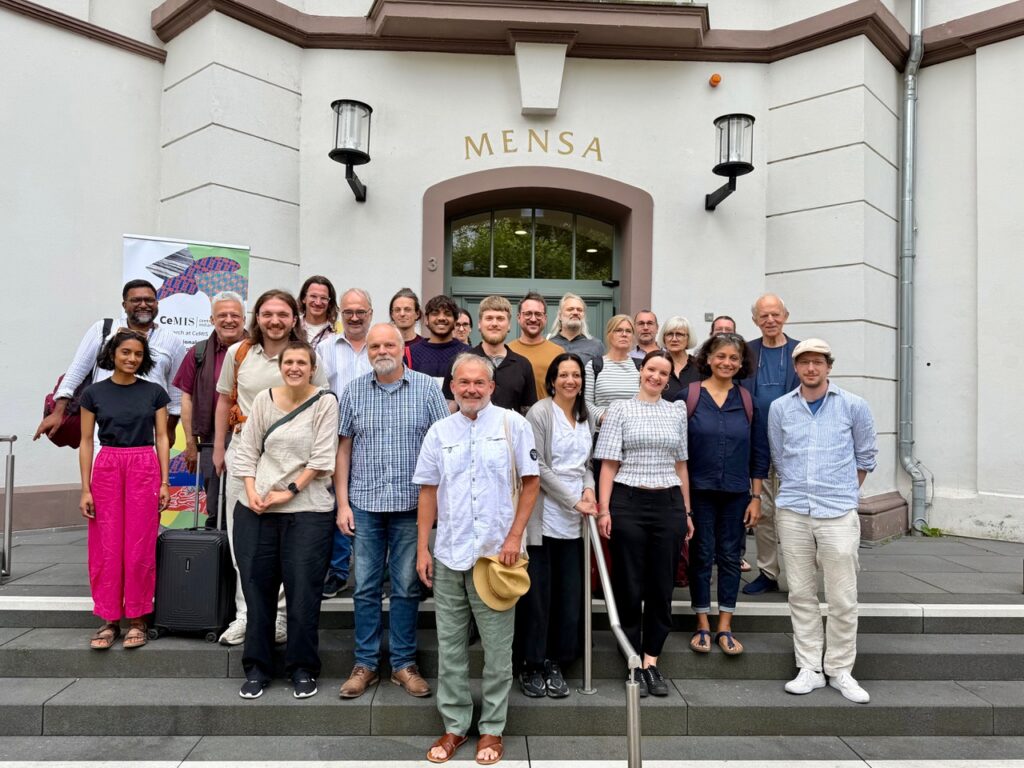
After twelve years, the DFG long-term project “Modern India in German Archives” (MIDA) will come to an end in October 2026. At our closing conference, entitled “Über MIDA hinaus”, we will look back on the achievements of the past twelve years, whilst also looking ahead to the future. MIDA set itself the task of making the richness of holdings in German archives on the history of modern India visible and systematically traceable for the period from 1706 – the start of the Danish-Halle Mission – to 1989 – the end of the German two-state system. This endeavour was underpinned by the conviction that the scholarly potential lying dormant in these collections far exceeds the current state of research.
Above all, however, the conference aims to look to the future and explore the further potential that German archives offer for researching the history of German-Indian relations. In our view, it is crucial for long-term projects such as MIDA that they leave behind a legacy that continues to have an impact and yields results upon which future research can build. Through book reviews and research panels, the conference aims to explore this potential whilst also putting the results of MIDA to good use as a starting point for further research.
Download programme as PDF:
Report
The conference began on 1 July with a screening of The Sound of Friendship: Warm Wavelengths in a Cold, Cold War at the Lumière cinema in Göttingen. In this documentary, director and long-standing MIDA staff member Anandita Bajpai traces the history of the listeners’ clubs of Radio Berlin International in India, the GDR’s state-run radio station. In the discussion that followed, Lalit Vachani and Josefin Graef discussed various aspects of the film with the audience, ranging from the post-1989 history of Radio Berlin International to the special role of documentary film in historical research.
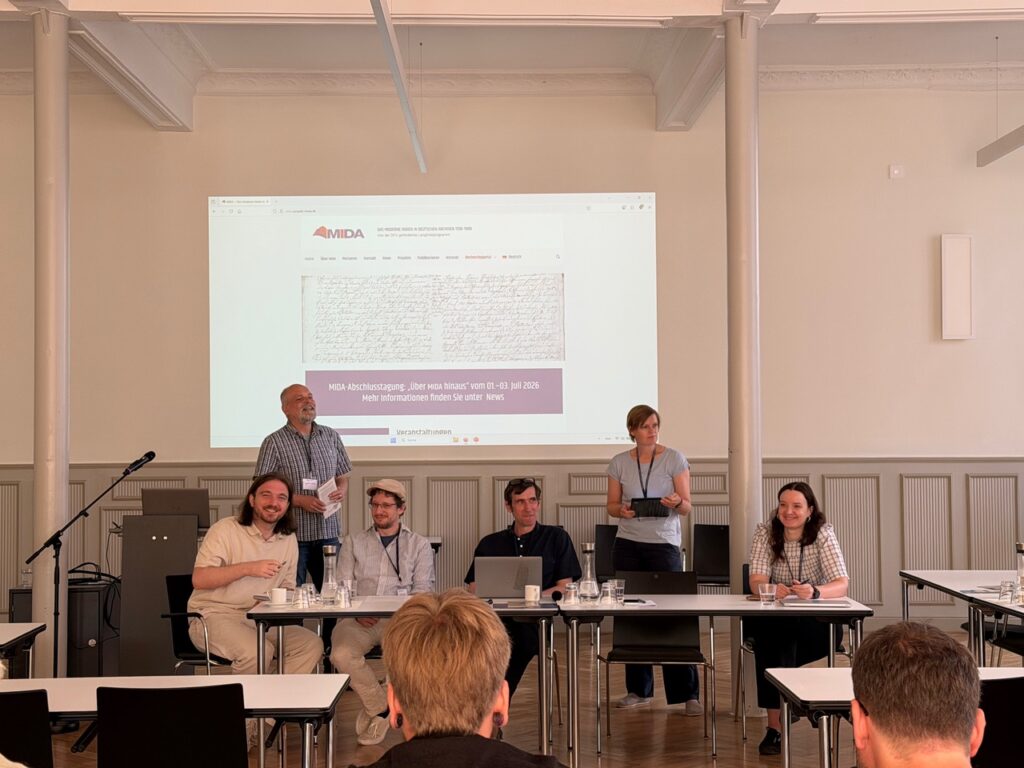
The second day of the conference began with an introduction by Ravi Ahuja to MIDA’s work over the past 12 years and a review of the objectives achieved. Ahuja particularly emphasised the role of such projects in times of shifting political circumstances in both India and Germany. Claudia Althaus from the German Research Foundation highlighted the excellent cooperation within the project, particularly over its long duration.
The first part of the conference involved a discussion of four recent publications produced as part of the MIDA project. The panels, moderated by Jürgen Nagel, each addressed practical research issues as well as substantive debates arising from the publications.
Tobias Delfs’ monograph Koloniale Naturforschung und Südasien takes the archives of the botanical garden in Kolkata as its starting point to trace the involvement of German botanists in the production of imperial knowledge within the British Empire during the first half of the 18th century. Martin Krieger’s commentary emphasised the particular spatial and entangled dimension of the research approach, which is already hinted at by the use of ‘und’ rather than ‘in’ in the title.
Michael Mann’s book Soldatenleben examines the role of European soldiers in the colonial wars of the second half of the 18th century in Asia and Africa. The use of German-language sources helps to fill gaps in research, which still relies heavily on sources of English and Dutch origin. In his commentary, Marian Füssel highlighted the significance of such an approach for military history, a discipline that is particularly subject to historical trends but which, precisely through a socio-historical lens, can provide important impetus for research.
Heike Liebaus and Tobias Delfs’ anthology Benjamin Schultze’s Dialogue Book on Madras. A Critical Approach to a Cultural-Historical Missionary Source represents a distinctive type of publication within the MIDA framework. The anthology was based on a clearly defined and explicit thematic brief for the contributors, inviting them to present their diverse perspectives on the dialogue book by the missionary Benjamin Schultze. Discussant Amal Shahid opened the discussion with her contribution on how one might succeed in doing justice to the critical potential of such a multi-perspectival approach.
In her published doctoral thesis, Vocational Training in the Indian Steel and Engineering Industries: Histories of Indo-German Co-operation, c.1950–1989, Josefine Hoffmann examines German-Indian co-operation in the field of vocational training. In his commentary, Roland Wittje referred to the broader context of German-Indian political and economic co-operation following independence, to the understanding of which the thesis makes an important contribution.
The first panel, moderated by Martin-Christof Füchsle and focusing on German naturalists in British India, addressed various aspects of the history of entanglements relating to the activities of German-speaking missionaries and forestry scientists in South Asia. In her contribution, Anne-Charlott Trepp examined the significance of drawing as a methodological technique for recording knowledge and the role of local actors in this process. Steven Reinhardt highlighted the connection between the Danish-Halle missionaries and the Strasbourg naturalist Jean/Johann Hermann, and discussed the reciprocal exchange of artefacts between Halle, Strasbourg and South India. Thomas Ruhland turned his attention to the Moravian Mission and discussed its integration into Indo-European natural history transfer networks, as well as its economic dynamics. Anna Sailer discussed the role of German forestry officials in the late 19th century in the forest management of the British Empire, examining the application of forestry concepts in India and Java from a comparative perspective. The ensuing discussion centred on the possibilities and limitations of approaches to the history of entanglements through the use of German-language source materials and the integration of local actors and contexts into historical narratives.
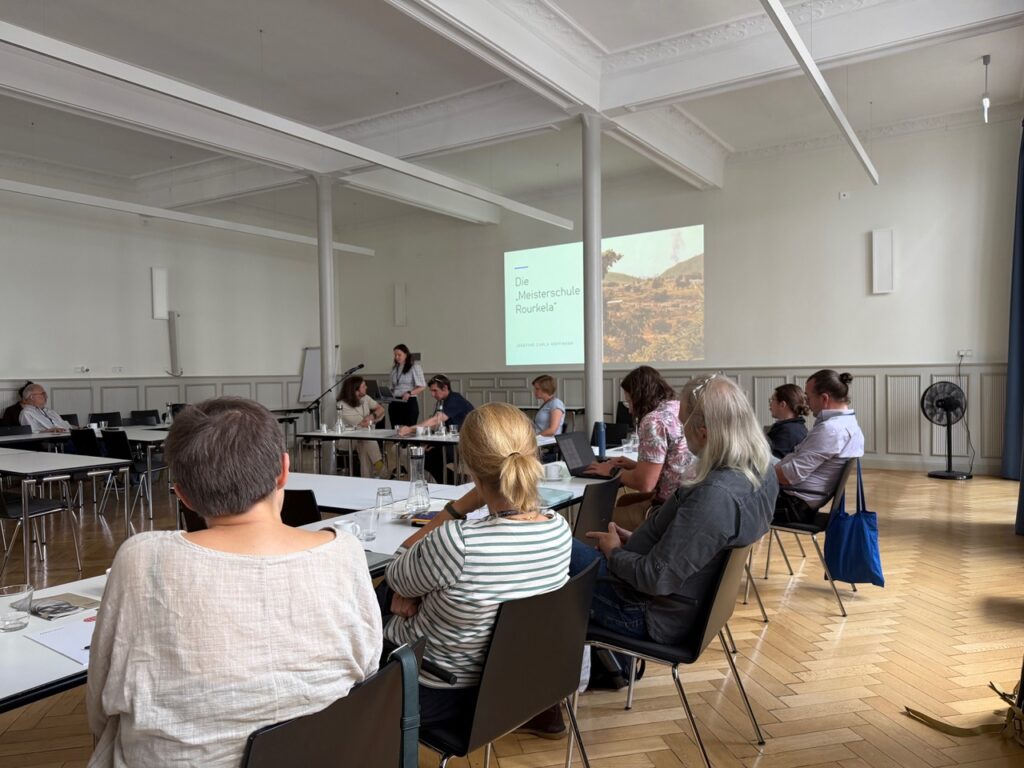
Unlike the first panel, the second research panel on aspects of the history of the Rourkela steelworks – built with West German assistance – addressed a much more narrowly defined topic. As the panel moderator, Nina Kleinöder opened the discussion by highlighting the potential of approaches based on corporate history to enrich our understanding of colonial and post-colonial processes. In his contribution, Karl Müller-Bahlke outlined the role of integrated steelworks in Indian development policy following independence and placed this within a broader context of the relationship between the steel industry and state sovereignty. Drawing on long-term ethnographic studies, Christian Strümpel highlighted the complex processes of class and identity formation in Rourkela. In his contribution, Mirko Schwagmann addressed the high-profile rivalry between the Rourkela project and the Soviet-backed construction of the steelworks in Bhilai, focusing in particular on the preparation of the German assembly and operations teams. Josefine Hoffmann outlined the specific history of the (ultimately failed) ‘Rourkela Master School’ as a site of conflict between Indian and West German stakeholders over the priorities of development policy. The panel’s strong thematic focus enabled an in-depth discussion in the ensuing debate on issues relating to the international context of the Indian development programme, including its implications for environmental and climate policy.
Martin Christof-Füchsle and Jannes Thode provided an overview of what are perhaps the most important findings of the MIDA long-term programme, from the perspective of the research still to be carried out. In addition to the database, the Archival Reflexicon and the thematic resources were also presented. Tobias Gradl then explained the practical aspects of long-term digital archiving to the conference participants. The supposedly technical details of this have far-reaching consequences for researchers’ access beyond the end of a funding period and are therefore a central part of historical research today.
In the closing panel, entitled ‘Beyond MIDA’, the panellists, moderated by Ravi Ahuja, revisited several aspects of the previous days’ discussions. Anandita Bajpai, Razak Khan, Stefan Lüder, Baijayanti Roy, Sandra Maß and Nina Kleinöder referred to points of discussion that remained open within the MIDA project itself, whilst also drawing on their own research experiences. Topics of discussion included the meaning and potential of the concept of ‘etanglement’, the impending loss of archival holdings, and the question of how to incorporate the strengths of various historical disciplines – such as business, military or environmental history – into the field of German-Indian historiography. The question of the precise meaning of ‘German’ and ‘Indian’ – which has accompanied the MIDA programme from the outset – was also raised once again in this context. Whilst source materials and historical entanglements are generally difficult to categorise within national frameworks, this is particularly true for such a long period of study, spanning from the early 18th to the late 20th century. Whilst these national ambiguities were dealt with pragmatically within the framework of the long-term project, they nevertheless serve as a prime example of the numerous methodological and theoretical decisions that must be made time and again in the course of such a research project, and for which there is usually no simple answer.
With this in mind, Heike Liebau and Michael Mann were ultimately able to draw a positive conclusion regarding the project as a whole, whilst also highlighting the further work and subsequent research that will stem from what has been achieved so far. The publications produced as part of the programme and the online research portal form the basis for this.